You want to learn a striking sport, but every gym seems to promise something different. One coach says boxing is the foundation of everything. Another swears by Muay Thai’s “art of eight limbs.” A third tells you kickboxing is the perfect balance. So how do you pick?
The boxing vs Muay Thai vs kickboxing debate confuses almost every beginner, because the three sports look similar from the outside. All of them involve punches, footwork and conditioning, yet the rules, techniques and training styles are quite different.
This guide breaks down the difference between Muay Thai and boxing, the difference between boxing and kickboxing, and how all three compare with MMA and Brazilian jiu-jitsu. By the end, you’ll know which one fits your goals.
Quick Overview: What Is Each Sport?
Boxing is the sport of punching only. Fighters use jabs, crosses, hooks and uppercuts, and success depends on timing, footwork, head movement and defense. It’s a modern sport with a long history behind it, and it’s often the first striking art people learn.
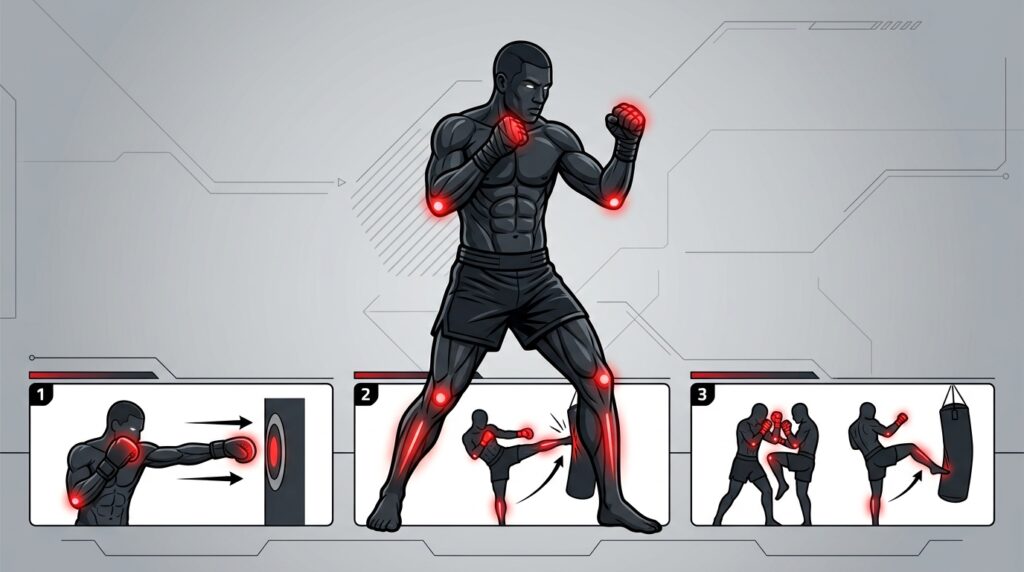
Muay Thai, also called Thai boxing, is Thailand’s national sport, with roots in battlefield combat. It’s known as the art of eight limbs because fighters strike with fists, elbows, knees and shins. The clinch (a close-range grappling position used to land knees and elbows) is a central part of the sport.
Kickboxing is a more modern hybrid that emerged in the 1960s and 1970s, blending karate-style kicking with Western boxing. Depending on the ruleset, it allows punches and kicks, and sometimes knees. Elbows and long clinching are usually restricted.
If you want a visual explanation, this video walks through the differences between Muay Thai and kickboxing and how fighters cross over between them:
The Core Difference: Striking Techniques
The easiest way to compare the three is by counting the weapons each sport allows.
| Feature | Boxing | Kickboxing | Muay Thai |
|---|---|---|---|
| Striking points | 2 (fists) | 4 (fists and feet) | 8 (fists, elbows, knees, shins) |
| Kicks | No | Yes | Yes |
| Knees | No | Sometimes | Yes |
| Elbows | No | Usually no | Yes |
| Clinch | Very limited | Limited or restricted | Central part of the sport |
| Stance | Bladed, mobile | Bladed, bouncy | Upright, squared |
| Typical pace | Fast, footwork-driven | Fast, combination-driven | Methodical, powerful |
| Best for | Hand skills, cardio | Fitness, dynamic striking | Self-defense, MMA prep |
Note: rules vary by organization and country, so always check the ruleset your gym trains under.
Boxing techniques
Boxing has the smallest toolbox, but it’s the deepest. Because fighters can only punch, they spend years refining timing, distance, head movement, slipping, blocking and counters. Boxers tend to have the sharpest hands of the three.
Kickboxing techniques
Kickboxing adds kicks to boxing-style punching. Fighters often throw fast combinations that mix hands and legs, and they rely heavily on angles and lateral movement. Because the sport keeps the boxing-like rhythm, it’s an easy transition for anyone who has boxed before.
Muay Thai techniques
Muay Thai has the largest toolbox. Round kicks with the shin, teep (push) kicks, knees, elbows and clinch work all belong to the game. Muay Thai fighters generally favor strong, simple strikes over flashy combinations, and shin conditioning is considered a core part of training.
Stance and Footwork: How They Move
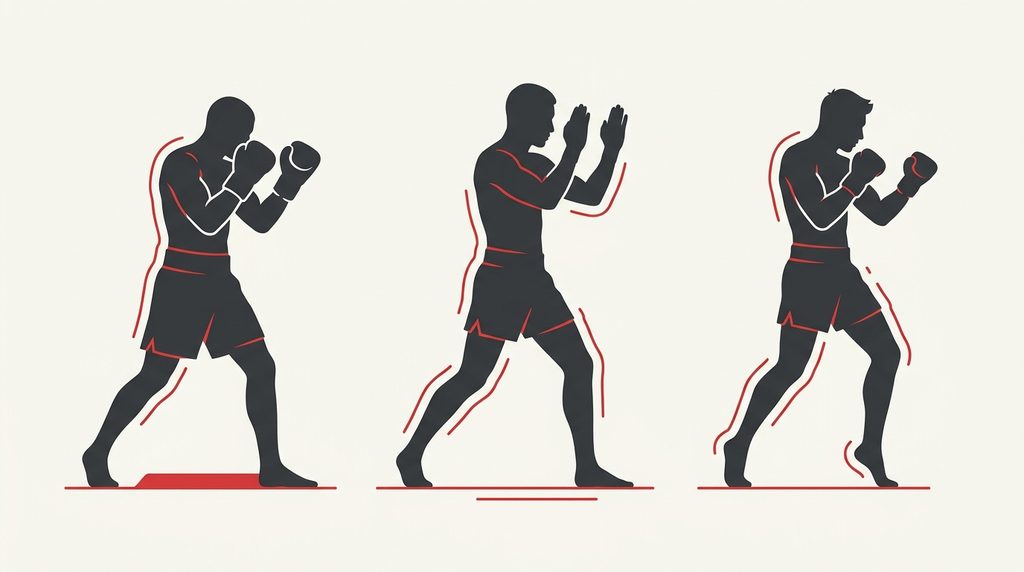
Stance is one of the clearest visual differences between the three sports.
- Boxing stance: Slightly bladed, hands high, chin tucked, with constant movement in and out of range. Head movement is a major defensive tool.
- Kickboxing stance: Also bladed, but lighter on the feet with a noticeable bounce. Fighters need to be ready to kick, check kicks and switch angles quickly.
- Muay Thai stance: More upright and squared to the opponent, with weight shifted back to allow the front leg to check kicks and push-kick. Movement is more measured and calculated.
The reason is simple: each stance is built around the weapons available. A boxer doesn’t have to worry about leg kicks, so they can lean forward and slip punches. A Muay Thai fighter must protect against kicks, knees and elbows, so a taller, more balanced posture works better.
For a detailed comparison of all three arts, this video may help:
Gloves and Equipment: What You Need to Train
Gear is another question beginners ask about, and the boxing vs kickboxing vs Muay Thai gloves comparison is worth understanding.
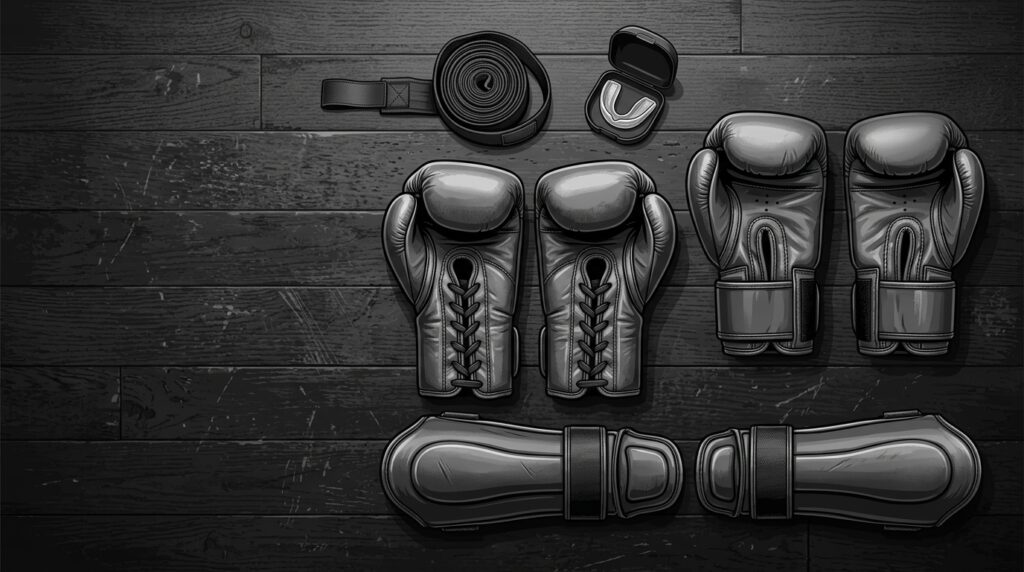
- Boxing gloves: Usually padded to protect your knuckles and your partner’s face. Sparring gloves are commonly 14 to 16 oz, while bag gloves are lighter.
- Kickboxing gloves: Very similar to boxing gloves, often a bit more flexible, and used with shin and foot protection when sparring.
- Muay Thai gloves: Generally designed with padding spread more evenly around the hand and more flexibility, which suits clinching and catching kicks.
Beyond gloves, you’ll usually need hand wraps and a mouthguard. For kickboxing and Muay Thai, shin guards and sometimes a groin protector are also standard for sparring. If you’re starting with boxing, our guide to the best boxing gloves for beginners covers weights, sizes and top picks in detail.
Is Muay Thai Better Than Boxing?
This is one of the most searched questions, and the honest answer is: it depends on what “better” means.
Muay Thai has the broader toolkit. Because it includes kicks, knees, elbows and the clinch, it covers more ranges of combat. That’s why many people consider it more practical for self-defense and MMA preparation.
Boxing has the deeper hand skills. Boxers train punching, head movement and footwork almost exclusively, so they often develop exceptional precision and defensive habits.
So is Muay Thai more effective than boxing? In a fight where kicks, clinching and elbows are legal, Muay Thai gives you more options. In a boxing-only contest, a trained boxer usually has the advantage. Neither is universally superior; effectiveness depends on the rules, the situation and the skill of the athlete.
Many coaches also point out that boxing is usually easier to pick up at first, since punching is a more natural movement. Muay Thai has a steeper early learning curve, but the variety keeps many people hooked. This video compares both from a practitioner’s point of view:
And here’s a personal take on training and competing in both:
Boxing vs Muay Thai vs MMA vs Jiu-Jitsu
Many people also compare these striking arts with MMA and jiu-jitsu, so here’s how they fit together.
MMA (mixed martial arts) isn’t a single style. It combines striking, wrestling and grappling. In boxing vs Muay Thai vs MMA, boxing and Muay Thai are striking ingredients inside MMA, while MMA adds takedowns and ground fighting on top. Many MMA fighters use boxing for hand skills and Muay Thai for kicks, knees and clinch work.
Brazilian jiu-jitsu (BJJ) is a grappling art focused on positional control and submissions, largely on the ground. In a Muay Thai vs kickboxing vs boxing vs jiu-jitsu comparison, the first three are stand-up striking sports, while jiu-jitsu covers what happens when the fight goes to the floor.
If your goal is to be well-rounded, a common path is to learn one striking art first, then add jiu-jitsu or wrestling later.
What Do People on Reddit Say?
If you browse boxing vs kickboxing vs Muay Thai Reddit threads, a few themes come up often:
- Coaching quality matters more than the label. A great boxing coach can be better for you than an average Muay Thai gym, and vice versa.
- Try a trial class before committing. Most gyms offer one.
- Consistency beats style. The best art is the one you’ll show up for.
- Cross-training is common. Many people learn boxing basics and add Muay Thai or kickboxing later.
Treat these as general trends rather than rules, and always check reviews and visit the gym yourself.
Which One Should You Choose?
Use your goal as the deciding factor.
Choose boxing if you want to:
- Build strong hand skills and defense
- Get a high-intensity cardio workout
- Start with a simpler technical base
Choose Muay Thai if you want to:
- Learn practical self-defense
- Prepare for MMA
- Train with a full-body, traditional martial art
Choose kickboxing if you want to:
- Enjoy a fast, dynamic mix of punches and kicks
- Get a great fitness workout with a striking focus
- Combine boxing footwork with leg strikes
Still undecided? Take a trial class in two of the three and see which one clicks. Your body and your motivation will tell you.
Frequently Asked Questions
What is the difference in boxing and kickboxing?
Boxing uses only punches. Kickboxing adds kicks, and sometimes knees, depending on the ruleset.
What is the difference between Muay Thai and boxing?
Muay Thai uses eight points of contact (fists, elbows, knees and shins) and includes the clinch. Boxing uses only fists.
Is Muay Thai harder than boxing?
Muay Thai has more techniques to learn, so it can feel harder at first. Boxing is simpler to start but takes years to master.
Kickboxing vs Muay Thai: diferença?
Em resumo, o Muay Thai permite cotoveladas, joelhadas e clinch, enquanto o kickboxing foca em socos e chutes, com regras mais restritas. (In short: Muay Thai allows elbows, knees and clinching, while kickboxing focuses on punches and kicks with more restricted rules.)
Boxe vs Muay Thai: which is better?
Boxe is the Portuguese word for boxing. Whether you search in English or Portuguese, the answer is the same: boxing for hands and defense, Muay Thai for a broader toolkit.
Can I train more than one?
Yes. Many fighters combine boxing and Muay Thai, and the skills complement each other.
Pick the Sport That Fits Your Goals
The boxing vs Muay Thai vs kickboxing question doesn’t have a single winner. Boxing offers refined hands and footwork. Muay Thai delivers the most complete striking toolkit and is a strong path toward MMA. Kickboxing sits between them, with a fast, dynamic style that’s great for fitness and competition.
Start with your goal, try a class, and pay attention to the coach and the training environment. Whichever sport you choose, consistency and good technique will take you further than the name on the gym door.